Jean Bernard Roussilhe: Imagelys Pyreneos Collection
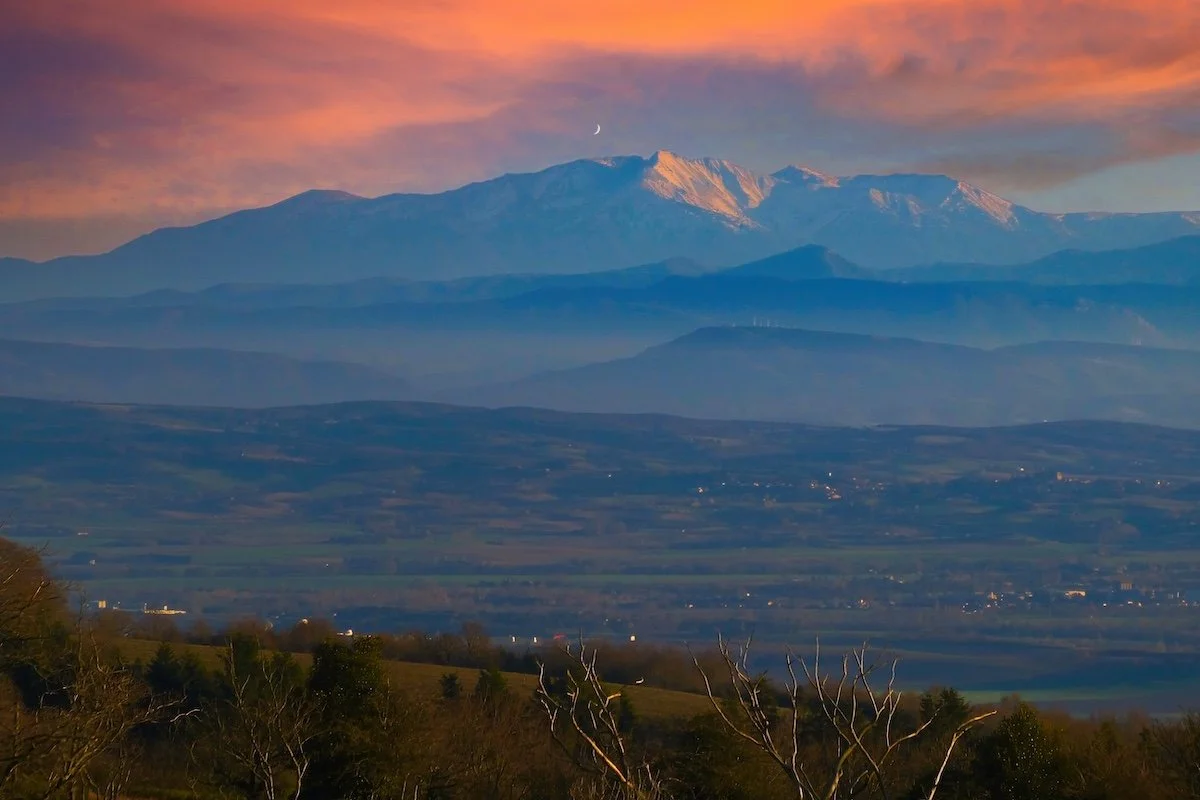
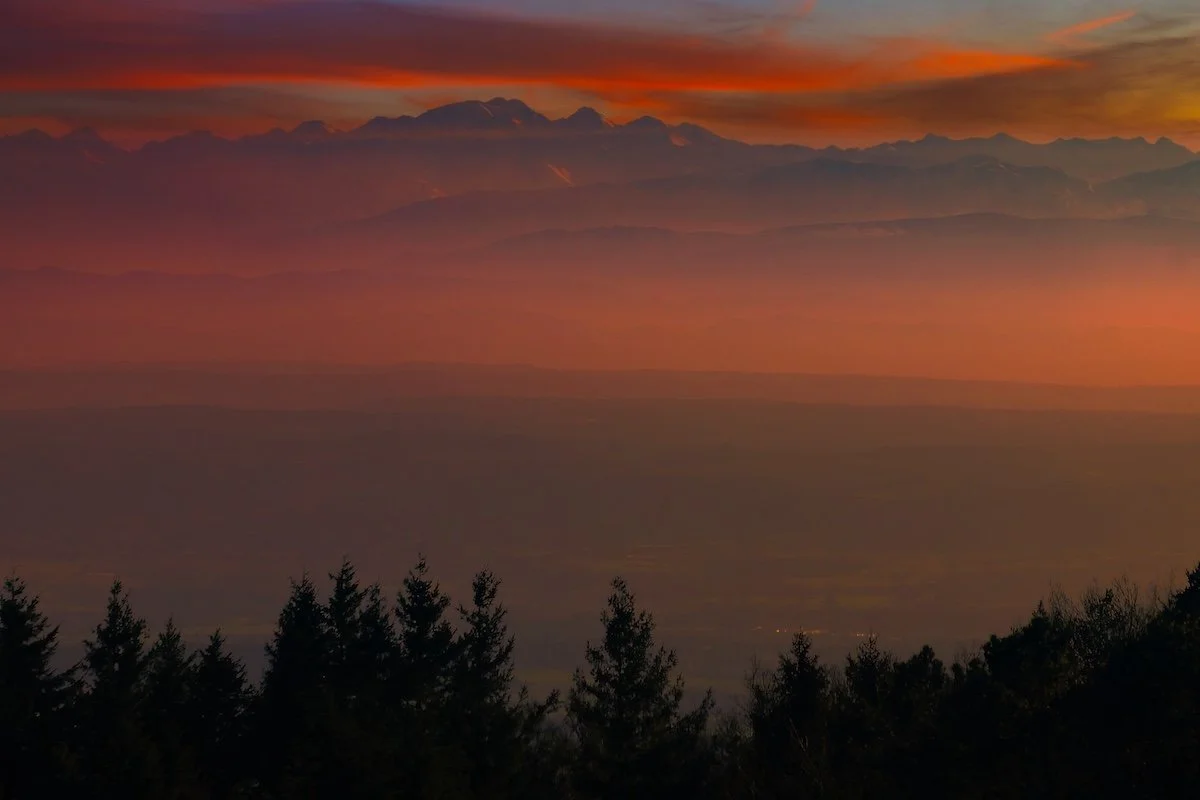
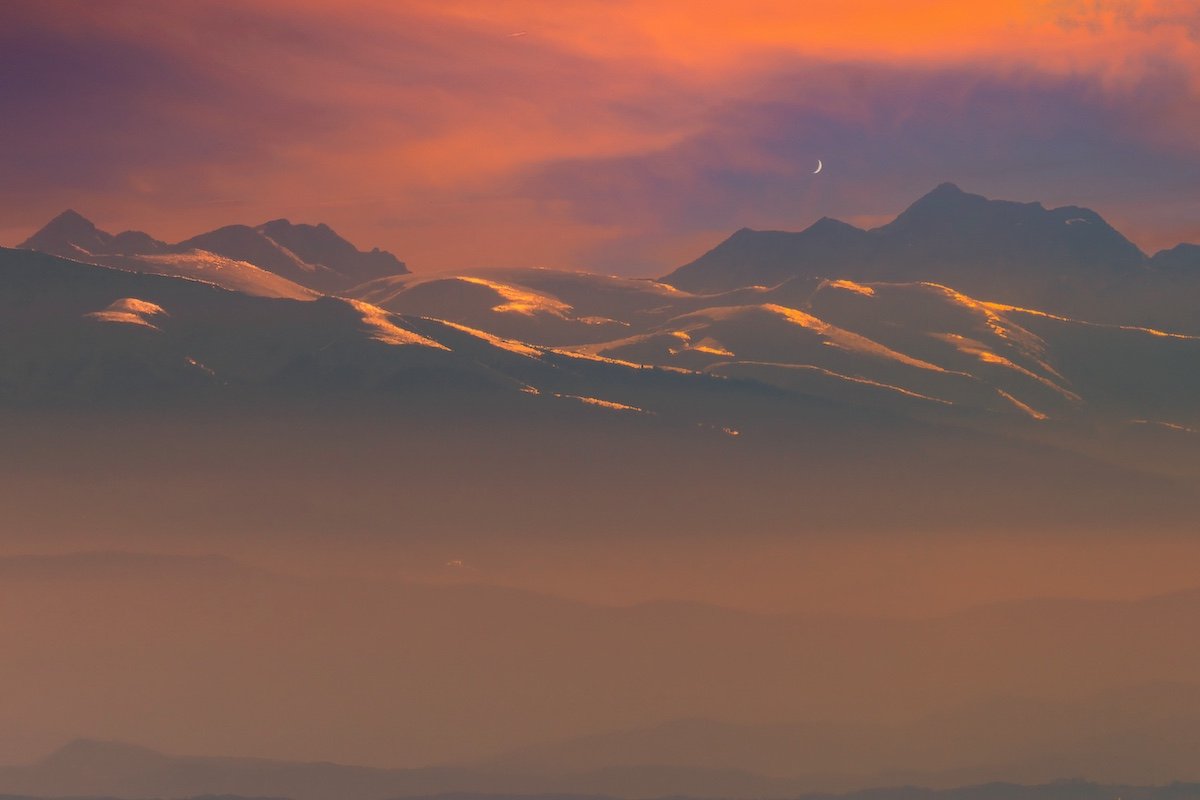
Text: VIONNE Magazine | Photographer: Jean Bernard Roussilhe (Imagelys)
Pyreneos — When Photography Becomes an Artistic Vision
A journey through the Pyrenees, seen through the imaginative eye of photographer Jean Bernard Roussilhe.
There are landscapes that we simply photograph, and others that invite us to create. The Pyrenees belong to the second category. With their dramatic peaks, secluded valleys, forests, rivers and constantly changing light, they offer an extraordinary territory for artistic exploration.
In his Pyreneos collection, French photographer and digital artist Jean Bernard Roussilhe presents fifty images inspired by this majestic mountain range stretching between France and Spain. Yet these photographs are not intended as conventional landscape records. They are interpretations—visual impressions in which nature becomes the raw material for an artistic journey.
Roussilhe's approach is rooted in photography, but it does not stop there. He is fascinated by the possibilities that emerge when a photographic image is transformed through texture, color, light and digital processing. His photographs therefore occupy an intriguing space between traditional landscape photography and contemporary digital art.
The mountains may remain recognizable, but their appearance can change dramatically. A landscape becomes an abstract composition of forms and textures. A forest can take on the atmosphere of a painting. Rocks, vegetation and distant peaks become elements of a visual vocabulary in which color and texture are as important as the original subject.
This distinctive aesthetic is closely connected to Roussilhe's work as the creator of the Imagelys software range. Using Imagelys Picture Styles and Imagelys Picture Lab, he explores textures, artistic filters and visual transformations that allow him to push his photographs beyond straightforward representation.
The technology, however, is never the final purpose. It is a means of expression.
What matters in Pyreneos is the dialogue between the original landscape and the artist's interpretation of it. Roussilhe does not simply ask the viewer to look at a mountain, a valley or a forest. He invites us to look at these familiar elements differently—to notice their rhythm, their textures, their colors and their emotional atmosphere.
This is perhaps what gives the collection its particular character. The photographs retain a connection with the real world while simultaneously suggesting another one: a more contemplative, imaginative and sometimes dreamlike landscape.
The Pyrenees have long inspired artists because they offer an exceptional combination of grandeur and intimacy. Their scale can be overwhelming, yet a single detail—a tree, a rock, a patch of vegetation or a change in the light—can become an entire world. Roussilhe's images move freely between these two perspectives, from the monumental to the intimate.
His artistic process also reflects a broader evolution in contemporary photography. Digital tools have expanded the photographer's creative vocabulary, making it possible to work not only with exposure, composition and light, but also with texture, pattern and visual interpretation. In this context, the photograph becomes more than a captured moment. It becomes the beginning of a creative process.
Pyreneos is ultimately an invitation to experience the mountains rather than simply observe them. Each image offers a different interpretation of the same vast natural environment, demonstrating how profoundly a landscape can change when seen through an individual artistic vision.
Jean Bernard Roussilhe's work reminds us that photography does not have to choose between documenting reality and creating art. It can do both.
Through Pyreneos, the mountains become a canvas, photography becomes a starting point, and digital artistry becomes a way of revealing another face of nature—one shaped not only by what the camera sees, but by what the artist imagines.
The complete Pyreneos collection is available to discover on Fine Art America.
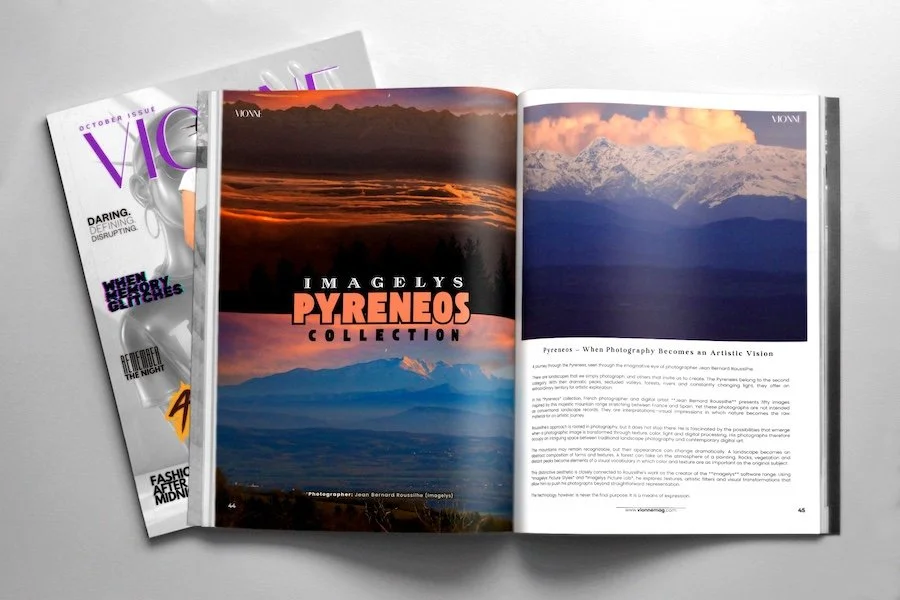
Want more?
Order Issue #18 to discover more powerful stories and explore exclusive features, interviews, and fashion highlights.
Available now online & in print-on-demand.