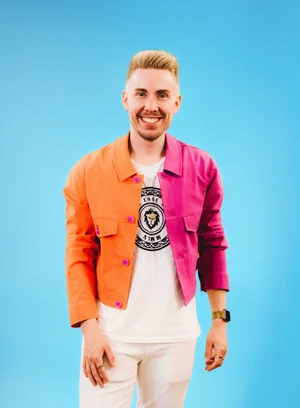
NiZED: Afterimage
“If everyone likes what you do right away, I don’t know if you’re actually saying anything. NiZED isn’t built to please everyone. I’d rather have one person strongly connect with a piece than have ten people call it “nice.””
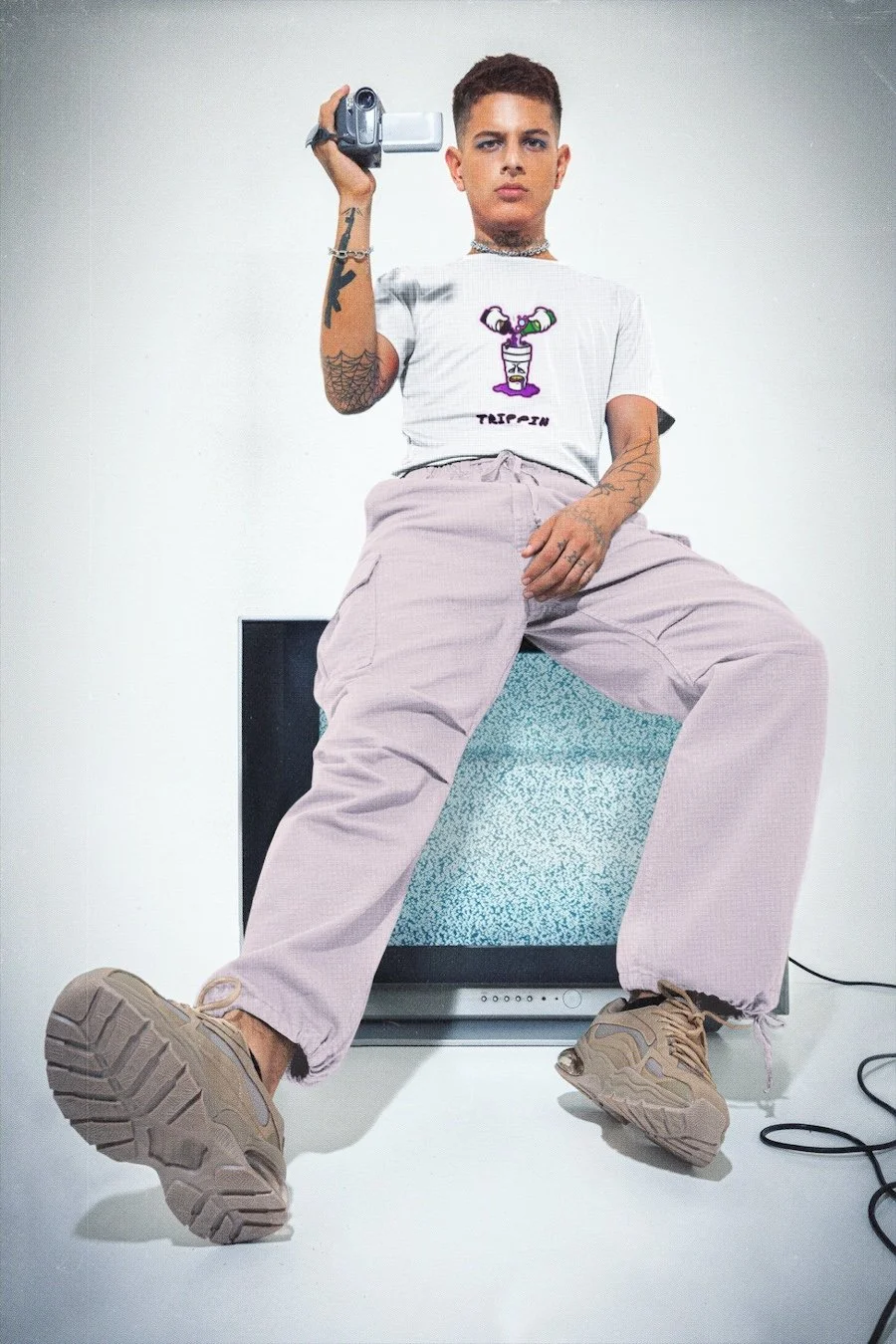
Text: VIONNE Magazine | Brand / Garment & Graphic Design: NiZED | Creative Direction: Erison Zeka | Visual Production: NiZED | Base: Berlin, Germany | Website: https://nized.de/
AFTERIMAGE
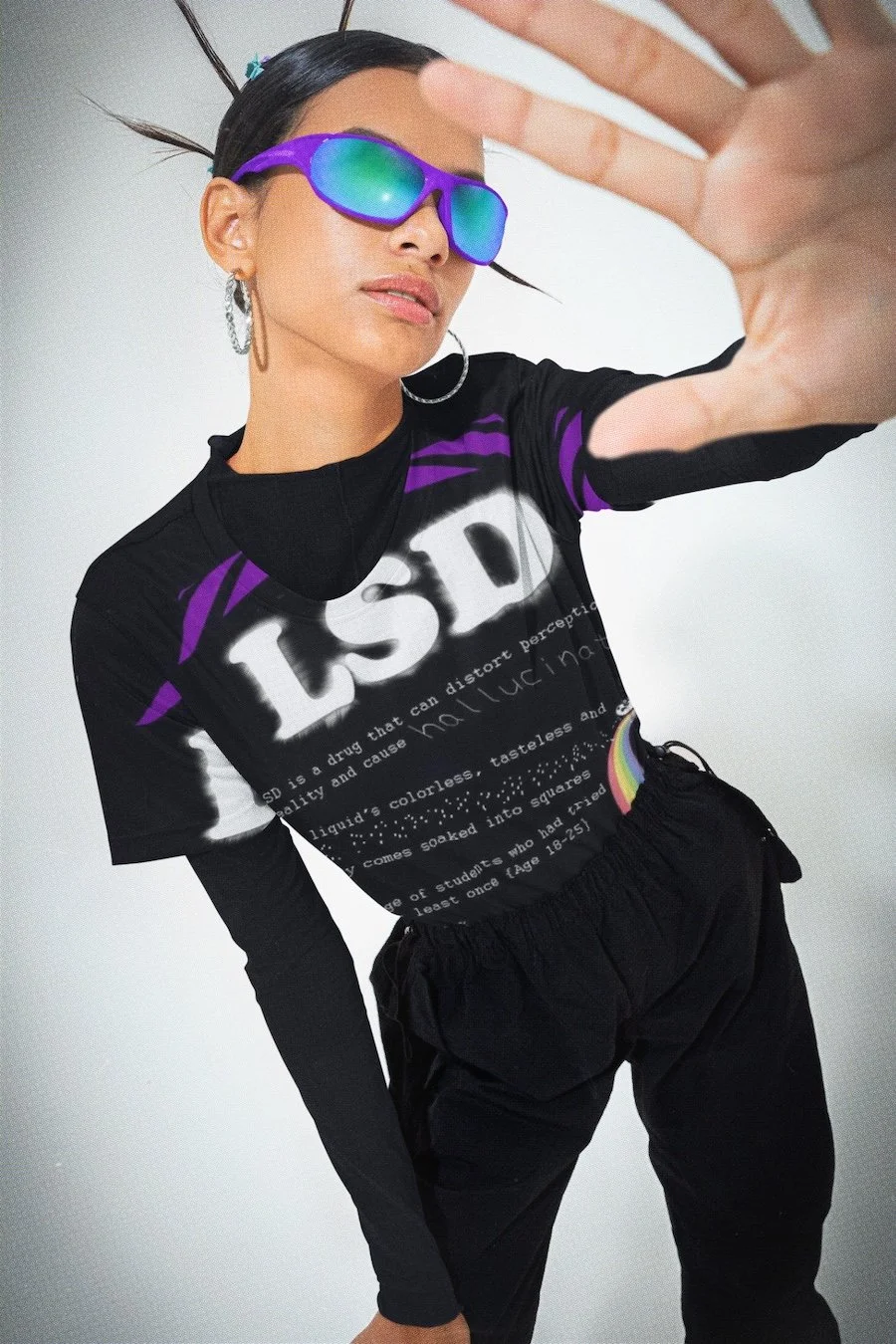
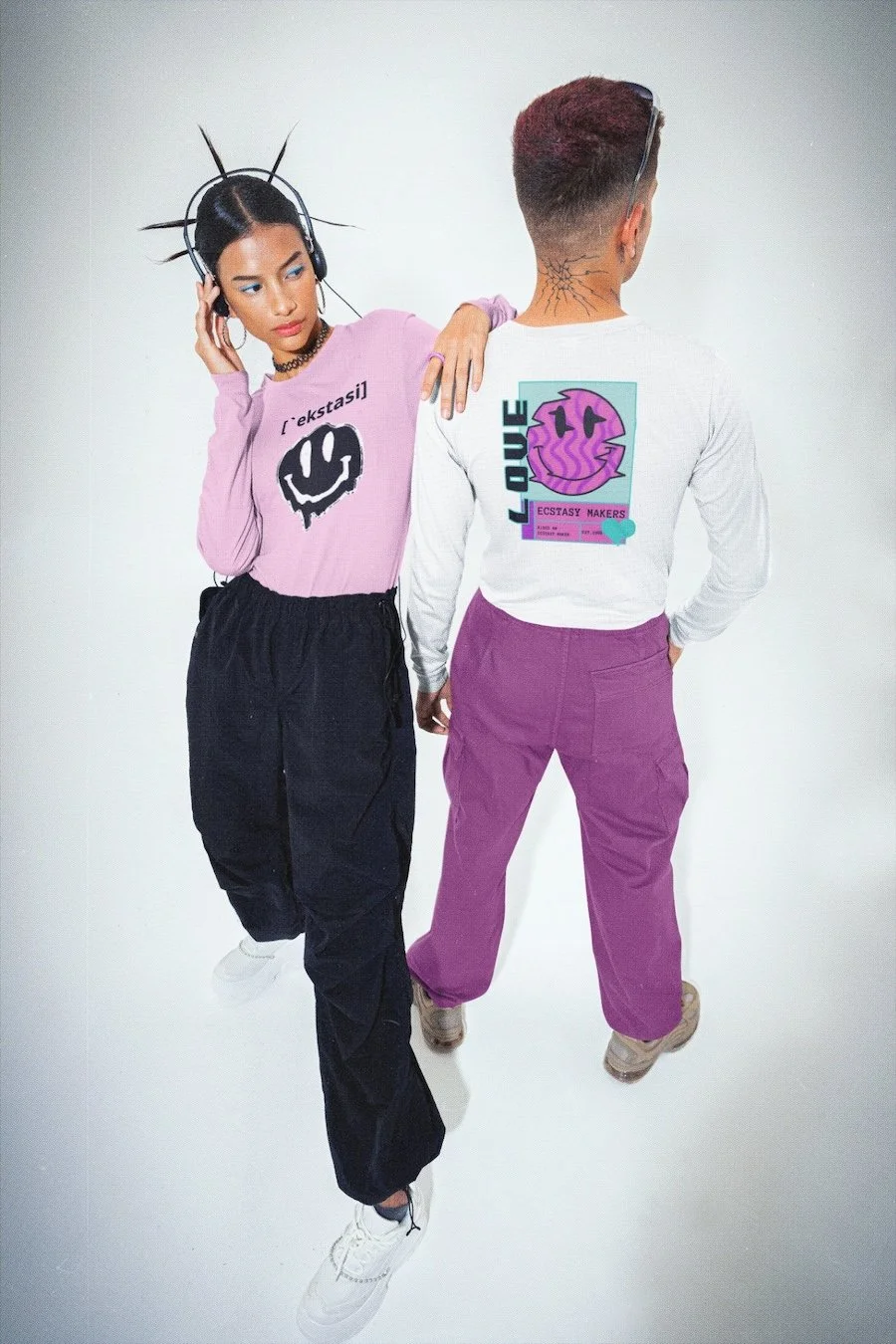
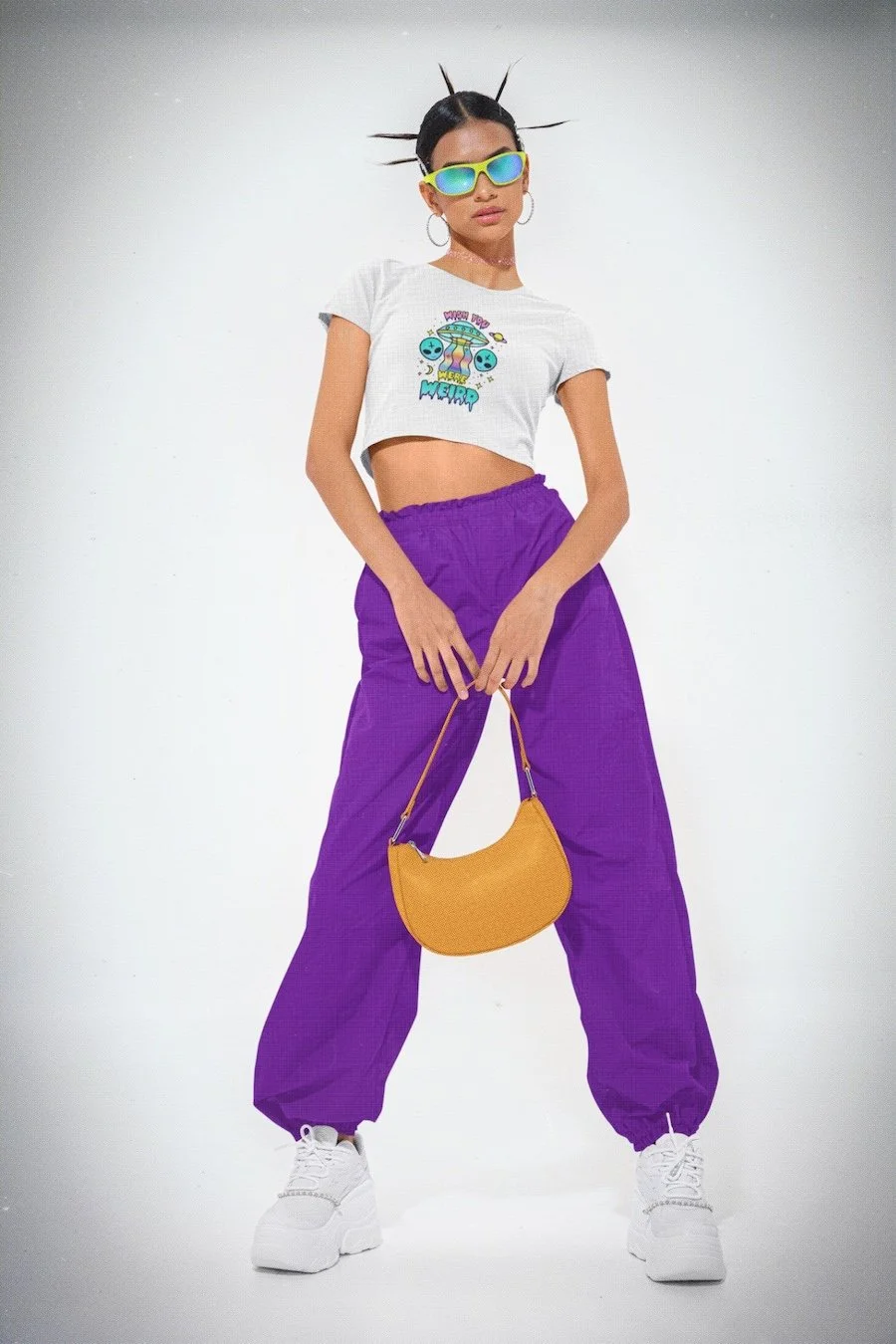
For Berlin-based NiZED, streetwear begins where the image stops being decoration and starts becoming a signal. Afterimage — Berlin After the Signal Fades explores what remains when the night itself has disappeared: distorted memories, flashes of attraction, pressure, repetition, escapism and the visual noise left behind. Under the creative direction of Erison Zeka, references to eyes, mouths, surveillance frames, altered states and fractured perception become wearable fragments of a larger world. Pieces titled LSD, Trippin, Xanax, Stay High and Perception Eye deliberately flirt with provocation, but never as an empty gesture. As Zeka explains, these references are not instructions but pieces of a visual vocabulary shaped by nightlife, psychology and the ambiguity of memory. NiZED does not ask to be universally liked; it asks to interrupt the scroll long enough to make someone feel something.
That uncompromising instinct has defined the label from the beginning. NiZED emerged without the traditional fashion-school trajectory, major investment or an established creative agency, growing instead through prints, digital culture, community, independent retail and Berlin itself. Concrete, nightlife, subculture and the friction between freedom and control have entered the brand almost subconsciously — not as postcard imagery, but as atmosphere. For Zeka, the garment is ultimately only one doorway into something larger. His ambition is for NiZED to exist across fashion, music, photography, events, visual art and physical spaces while retaining the raw identity that gave it meaning in the first place. Afterimage captures that philosophy perfectly: the moment may end, the lights may disappear, but the strongest images refuse to leave.
Website: https://nized.de/
Instagram: NiZED
Interview with Erison Zeka
VIONNE: Erison, NiZED says, "We do not sell products, we sell emotions." What emotion do you want someone to experience before they even think about the garment itself?
Erison: I want them to feel something before they even understand what they're looking at. It could be curiosity, attraction, discomfort, nostalgia, even confusion. What matters is that moment when something makes you stop instead of just scrolling past it. For me, the garment is only the medium. The real goal is to create a feeling that stays with you.
VIONNE: Every NiZED design begins with a concept, with the print functioning as the story rather than decoration. What usually comes first for you — an image, a feeling, a phrase, or something you experience in real life?
Erison: There isn't really one formula. Sometimes it's an image I come across, sometimes a feeling, a thought, a conversation or something that happens in real life. Usually something catches my attention and I start asking myself why it does. From there, I build the concept around it. The visual comes afterwards. I don't really start with "I need a cool graphic." I start with "What do I want to say or make people feel?"
VIONNE: AFTERIMAGE explores what remains after the night is over: fragmented memory, altered perception, pressure, and repetition. What fascinates you about that space between the experience itself and what we remember afterwards?
Erison: Memory is never completely accurate. You can experience something intensely and a few days later only remember fragments of it — a face, a light, a sound, a feeling, but not the whole moment.
That space between what actually happened and what remains in your head is what fascinates me. AFTERIMAGE is built around that idea. The night ends, but parts of it keep existing somewhere in your mind.
VIONNE: The collection uses imagery connected to eyes, mouths, surveillance, distortion, visual noise, and even references such as LSD, Xanax, Trippin and Stay High. How do you use provocative imagery without letting provocation become the entire point?
Erison: For me, provocation only works when there's something behind it. Putting a provocative word or image on a garment just to get attention gets boring very quickly.
The references in NiZED connect to perception, nightlife, escapism, pressure, different states of mind. They're fragments of a world, not instructions on how to live, and people can read them however they want. I actually like it when someone looks at a piece and comes away with a completely different interpretation than mine.
VIONNE: Berlin seems inseparable from NiZED — its concrete, nightlife, subcultures, and tension between control and excess. If the brand had been born in another city, do you think NiZED could still look and feel the way it does today?
Erison: I think NiZED could exist somewhere else, but it wouldn't be the same NiZED.
Berlin shaped the brand: the nightlife, the subcultures, the architecture, the people, that constant pull between freedom and control. It all finds its way into what we create.
Berlin doesn't show up as a postcard in the designs. It's more like an atmosphere in the background.
VIONNE: NiZED openly accepts that some people will connect with the work immediately and others will not. In an industry obsessed with reach and approval, how important is it to you that the brand remains capable of dividing opinion?
Erison: Very important. If everyone likes what you do right away, I don't know if you're actually saying anything. NiZED isn't built to please everyone. I'd rather have one person strongly connect with a piece than have ten people call it "nice." Being seen and being remembered aren't the same thing. I think a brand gets interesting once it has a point of view and is willing to stand behind it.
VIONNE: The label has grown through community, events, retail spaces, independent collaborations, and connections with people around the brand. What makes a collaboration or connection feel authentically NiZED rather than simply putting two names together?
Erison: It has to feel natural. I'm not interested in putting two names next to each other just because it looks good on paper.
A big part of NiZED has always been the people and places around it. Stores like Laden21, Bunny's Store and Die Grüne Lunge have been important because they let people actually discover the clothes in a real environment and become part of that world.
For me, the best collaborations come from a shared energy, a shared mindset, or just mutual respect. It has to make sense beyond two logos next to each other.
VIONNE: Looking beyond AFTERIMAGE, what do you want the next evolution of NiZED to become — not only as a streetwear label, but as a wider creative world of fashion, nightlife, and culture?
Erison: I don't want NiZED to stay just a clothing brand. I want it to become a creative world people can enter through different doors: fashion, music, events, photography, visual art, collaborations, physical spaces. The clothes will always be an important part of it, but I see them as one expression of the world we're building.
The next step is to make that world feel bigger without losing the rawness and identity NiZED started with.
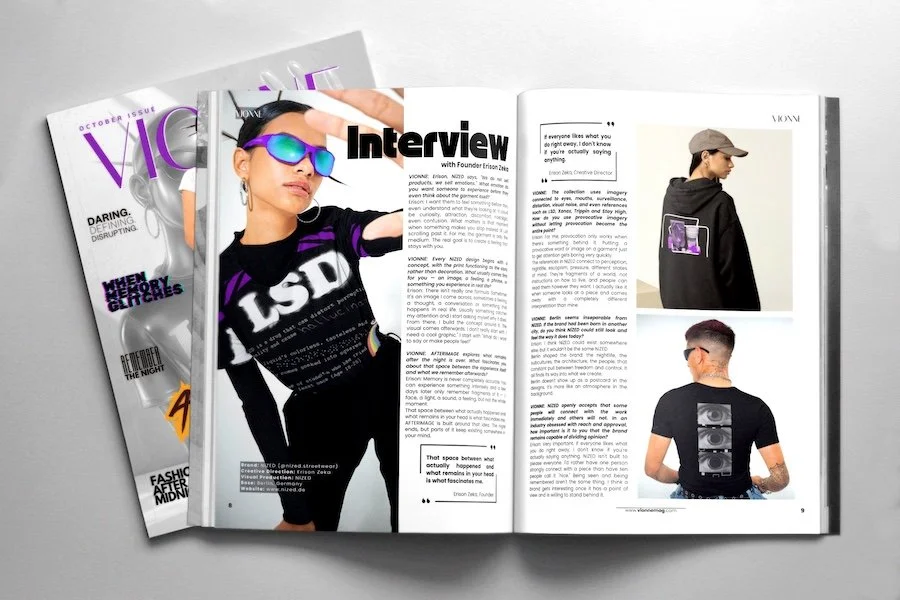
Want more?
Order Issue #18 to discover more powerful stories and explore exclusive features, interviews, and fashion highlights.
Available now online & in print-on-demand.