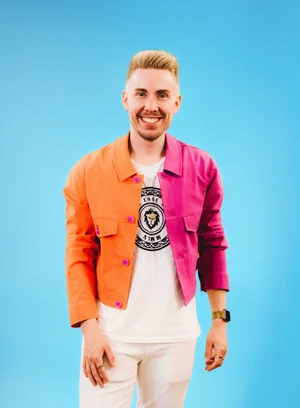
Anna Kiskachi: Baroque Garden
“With an instrument so strongly associated with the past, visual language can suddenly make the harpsichord feel contemporary, physical and alive again.”
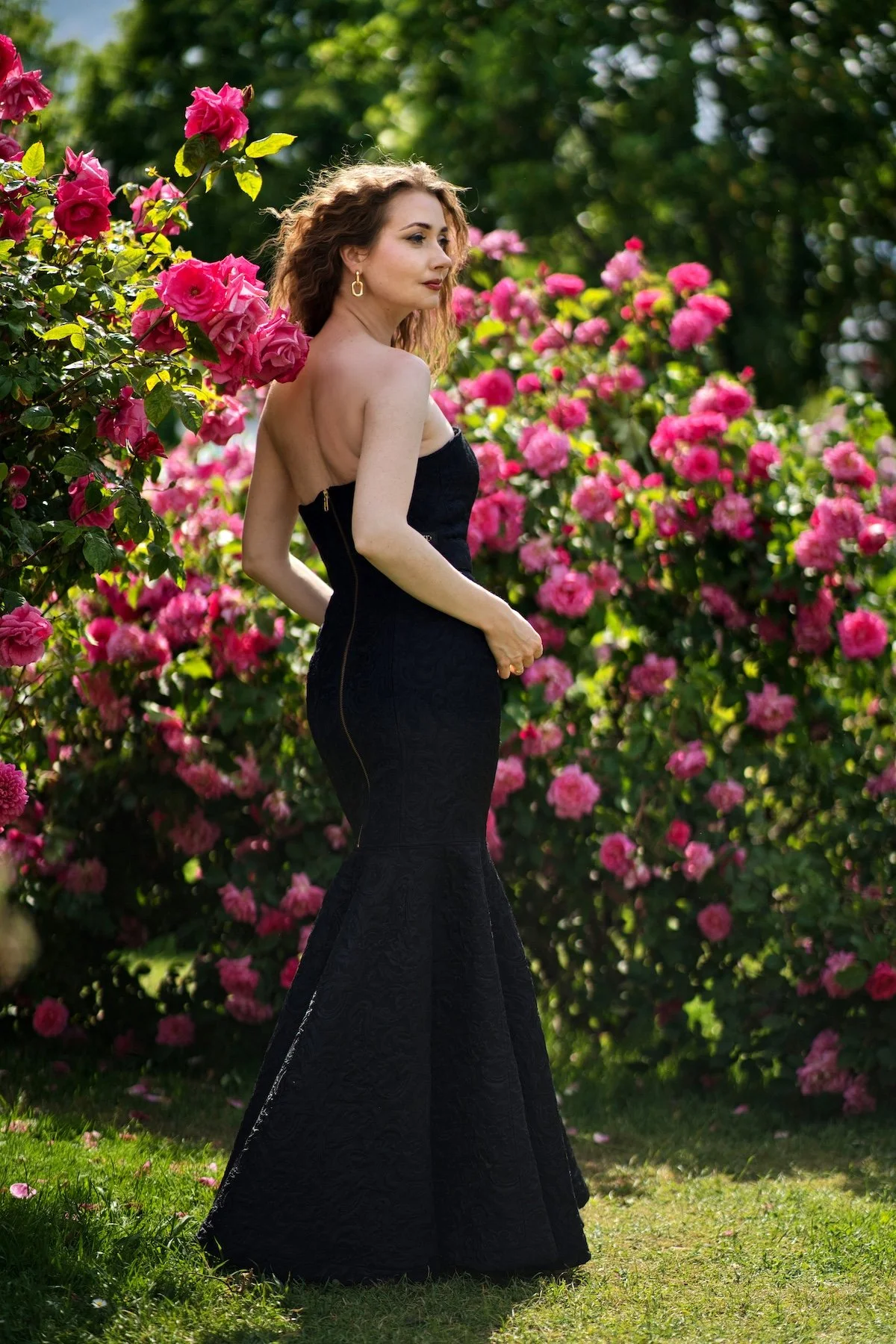
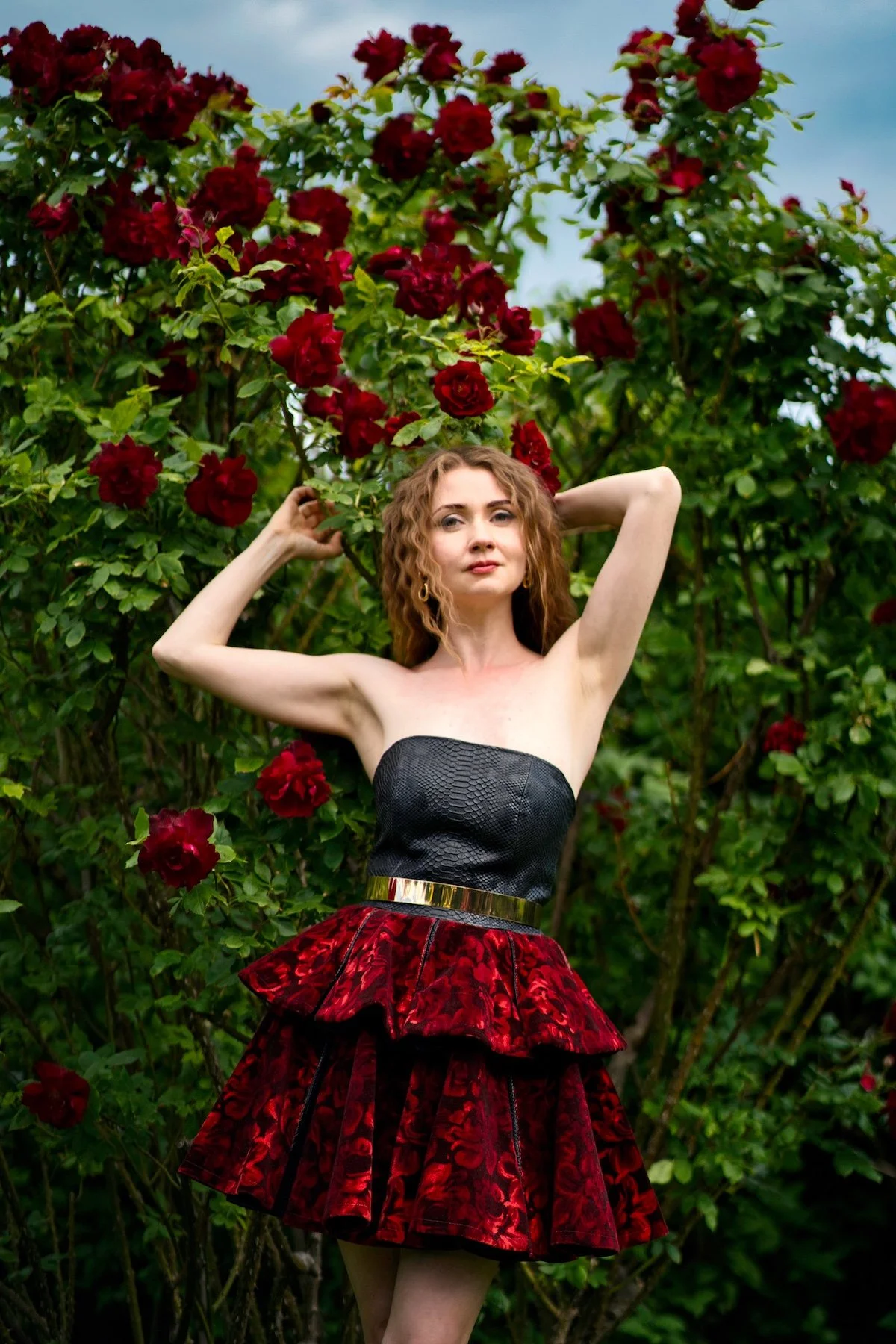
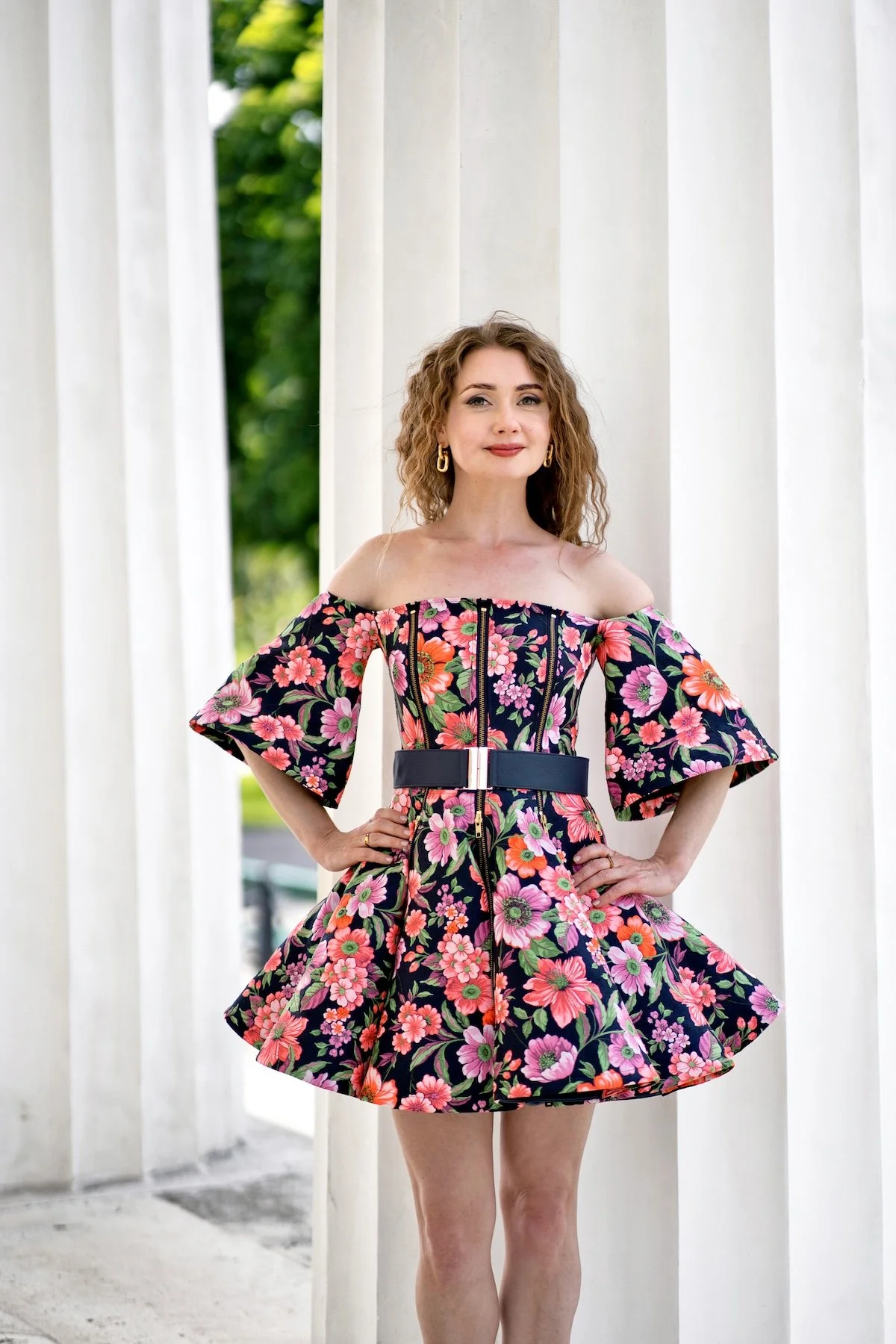
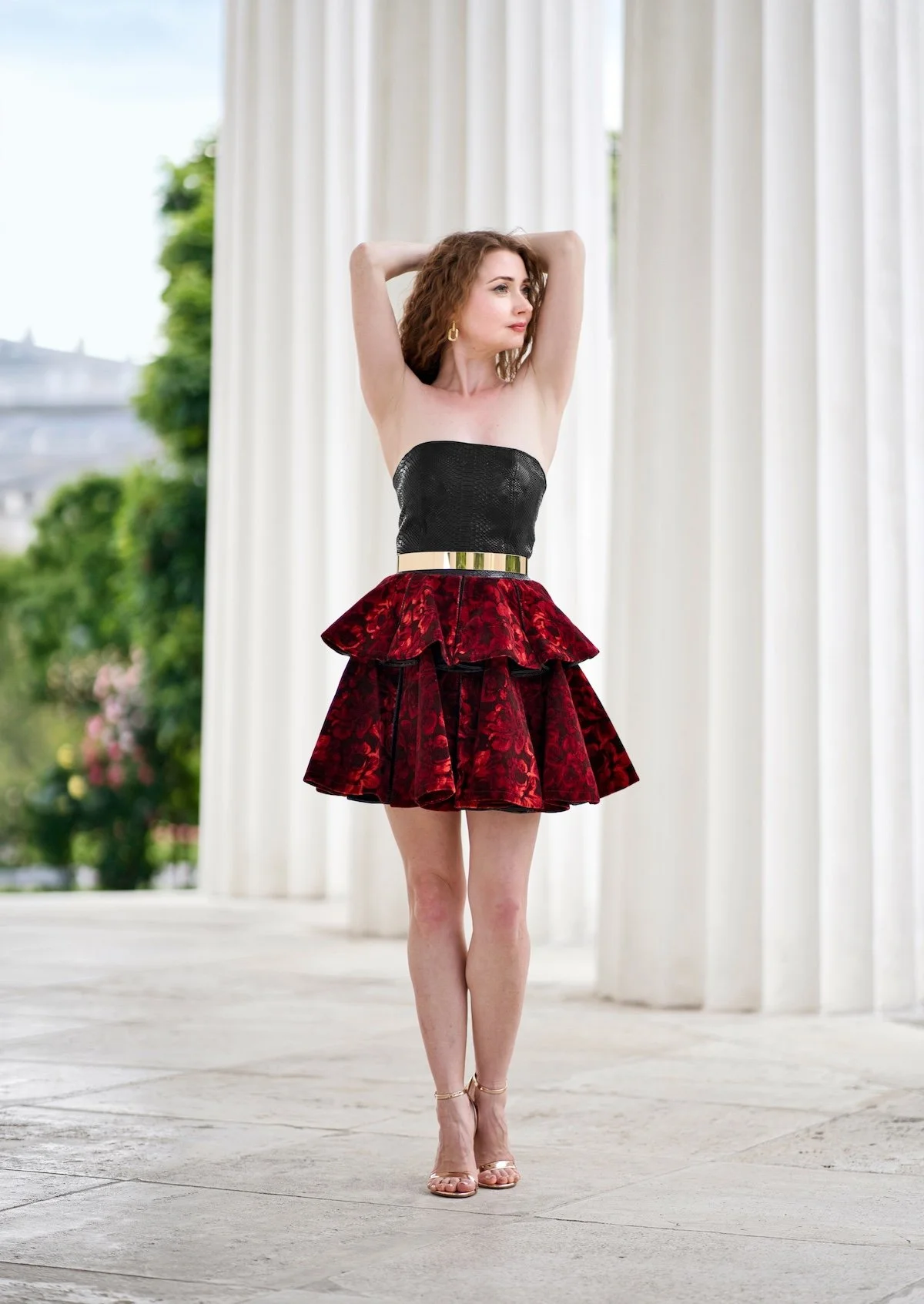
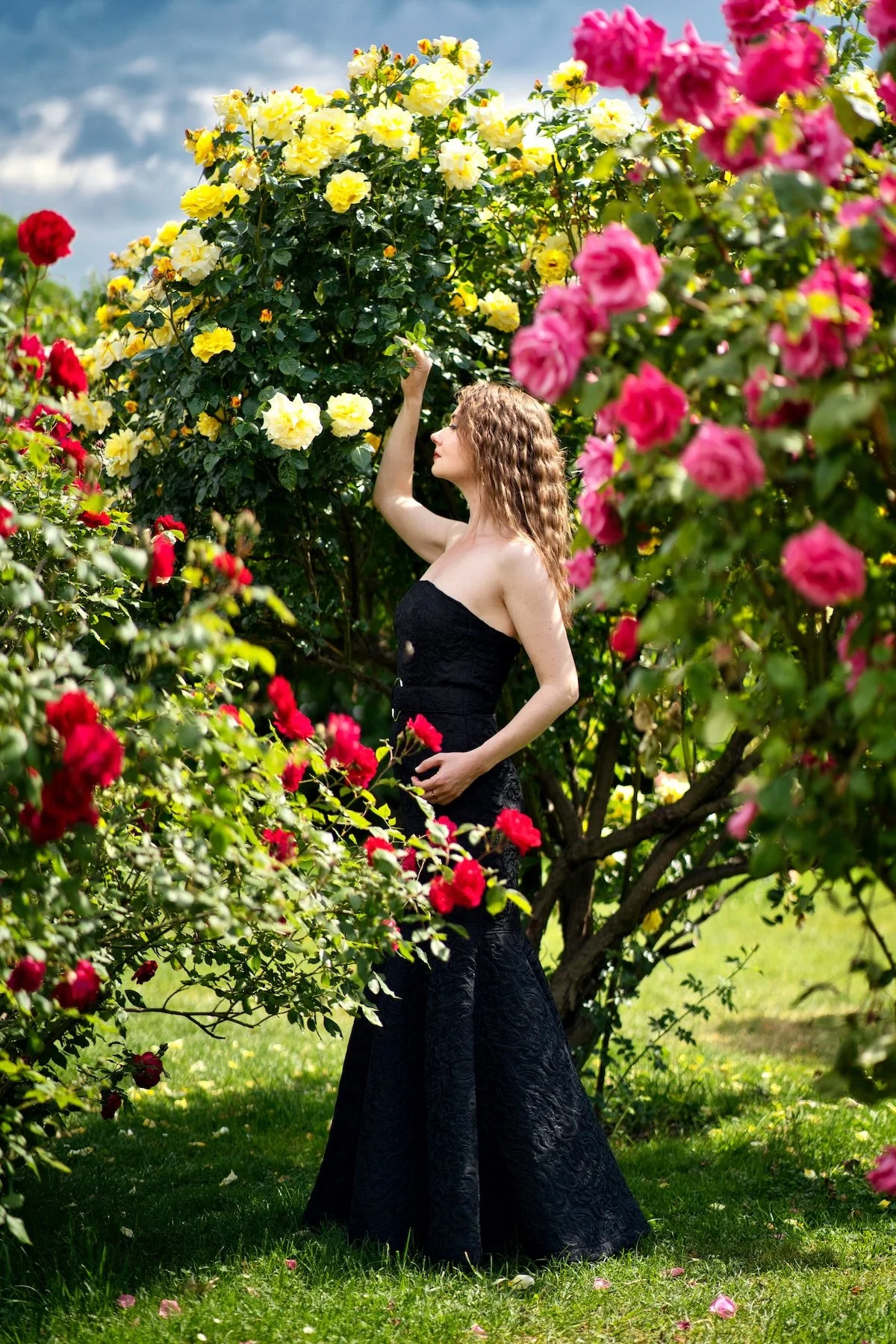
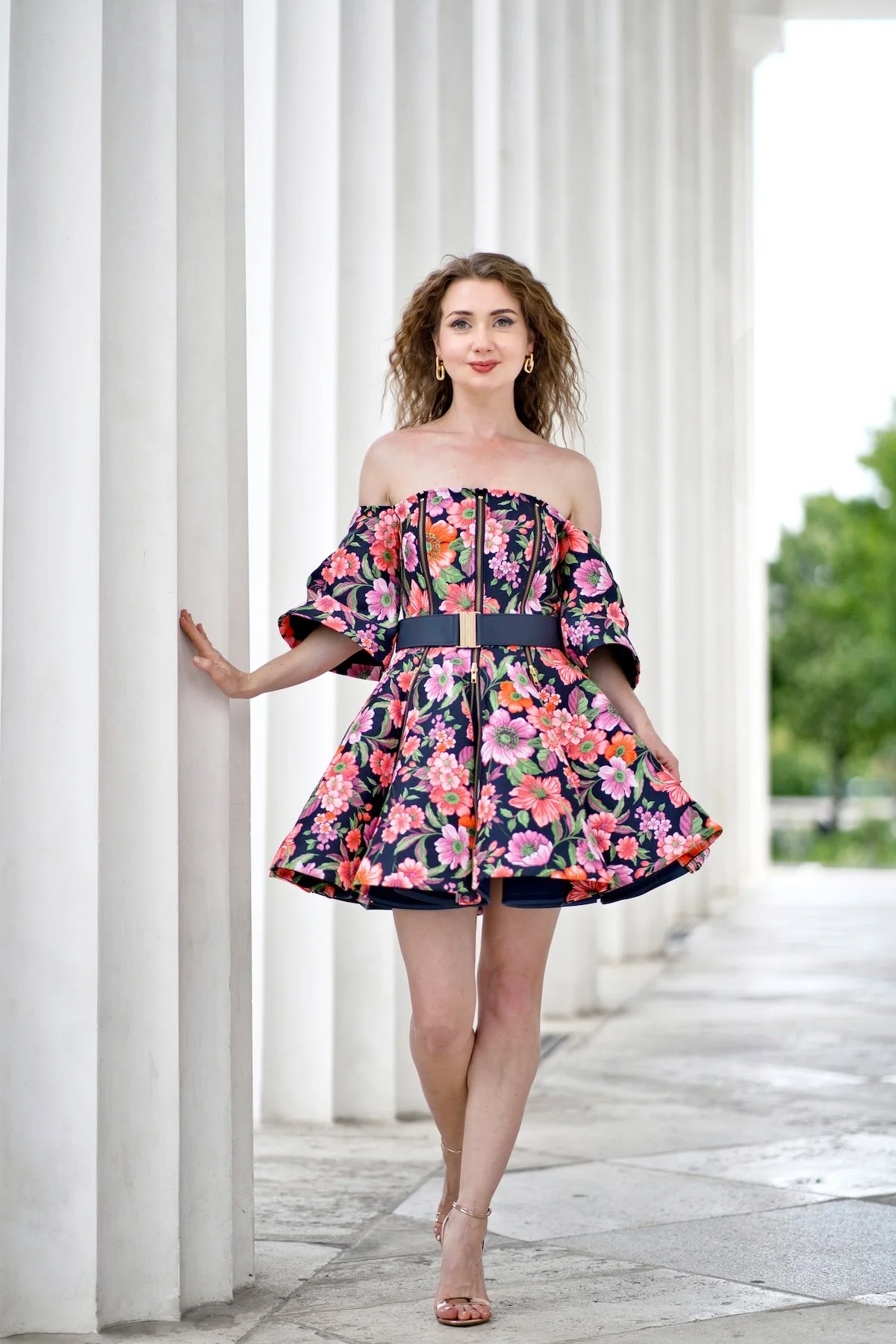
Text: VIONNE Magazine | Model/Artist: Anna Kiskachi | Makeup Artist: Brijance Makeup Artist
Fashion Brand: Manuel Essl Design | Photographer: Manuel Essl
Harpsichord Off Leash: Anna Kiskachi
With her unmistakable artistic vision, Anna Kiskachi redefines what the harpsichord can be in a contemporary world. Moving between music, fashion, theatre, and visual storytelling, the Graz-based musician approaches performance as a complete atmosphere — one shaped not only through sound, but through silhouette, movement, emotion, and cinematic tension. Her philosophy, Harpsichord Off Leash, challenges traditional expectations and transforms the historical instrument into something bold, physical, and unexpectedly modern.
For this exclusive VIONNE conversation, Anna reflects on artistic freedom, life between cultures, the connection between fashion and music, and the creative universe she continues building around the stage. From international performances and interdisciplinary projects to collaborations with designer Manuel Essl and Brijance Makeup Artist, her world exists somewhere between baroque elegance and contemporary experimentation.
Interview with Anna Kiskachi
VIONNE: Anna, you describe your work as “Harpsichord off Leash” — where did that idea come from?
Anna: The idea of Harpsichord Off Leash came from a very instinctive feeling that the harpsichord is far more wild, physical and contemporary than people usually imagine.
Most people still associate the instrument exclusively with the baroque repertoire — with elegance, refinement, historical performance practice.
But I always heard something else inside it as well: rhythm, sharpness, architecture, danger, even brutality sometimes.
That is probably why I became so interested in building bridges between centuries.
I perform not only original harpsichord repertoire, but also very unexpected transcriptions — Stravinsky on harpsichord, for example, or Saint-Saëns’ Danse Macabre, Dvořák’s Slavonic Dances with my A&A cembalo duo.
Many people initially think this should not work at all — and then suddenly realize that the colors, the textures and the rhythmic energy sound strangely natural on the instrument.
I think I was never interested in treating the harpsichord like a museum object.
For me, it is a living stage creature.
Harpsichord Off Leash means freeing the instrument from its expected role — and allowing it to become theatrical, excessive, modern and unpredictable again.
In a way, it is less about “crossing genres” and more about revealing something that was already hidden inside the instrument all along.
VIONNE: You’re originally from Moscow and now based in Graz. How has moving countries influenced you as an artist?
Anna: Moving from Moscow to Austria changed me profoundly — both artistically and personally.
I received a very rigorous and fundamental musical education at the Moscow Conservatory, where I studied harpsichord, piano and historical keyboard instruments. Later, my artistic path continued through several major European institutions, including Salzburg, Vienna, Munich, Düsseldorf and Cologne.
Moscow gave me a very profound musical and intellectual foundation — one that still shapes the way I hear, think and build artistic ideas today.
But when I arrived in Europe, an entirely new world suddenly opened in front of me — especially through the harpsichord.
In Moscow, historical instruments were relatively rare. In Europe, suddenly they were everywhere: instruments, ensembles, projects, festivals, possibilities.
And with that came a completely different life.
I began constantly moving between cities and countries — because of studies, concerts, productions and unexpected artistic projects. There were periods when I would wake up not really knowing where I would spend the next night or which city life would suddenly throw me into next.
Strangely, I loved that feeling.
It was unstable, sometimes chaotic, but also incredibly alive.
I think this constant movement shaped my artistic language very deeply. It made me less interested in rigid categories and more drawn to contrasts — baroque and Stravinsky, music and fashion, structure and spontaneity, architecture and emotion.
Fashion probably entered my world through the same door: not as decoration, but as another form of atmosphere, silhouette and storytelling.
Living between cultures, languages and aesthetics taught me that identity is not something fixed.
Sometimes it is something you continuously compose — almost like music.
VIONNE: What do you love most about performing live?
Anna: What I love most about performing live is that the visible moment on stage is actually only the very tip of something much deeper.
Behind every performance there are years — sometimes decades — of work: not only at the instrument itself, but also on education, on intellectual curiosity, on identity, on understanding who you are artistically.
I think a personal sound or interpretation is not something you simply “invent”.
It slowly forms through everything you absorb, experience, question and live through.
And then, on stage, something very strange and beautiful happens:
All of that accumulated material — knowledge, discipline, emotions, contradictions, personal experiences, ways of seeing the world — suddenly begins flowing through the music at the same time.
That is why live performance feels so intense to me.
In a way, it is probably the moment when I feel most free and most fully myself — sometimes even more than in ordinary life.
The stage can be terrifying, of course.
But it is also one of the few places where nothing inside you can hide anymore.
VIONNE: How important is style when you step on stage or in front of the camera?
Anna: Fashion is very important to me on stage because my entire musical philosophy is connected to the idea of Harpsichord Off Leash.
I never wanted the harpsichord to remain trapped inside rigid ideas of what an early music concert is “supposed” to look like.
For me, fashion is not decoration and not trend. It is part of the artistic language itself.
I think audiences experience concerts visually as much as emotionally: silhouettes, textures, movement, tension, light.
That is why I care deeply about creating a complete atmosphere on stage where the instrument, repertoire, body, clothing and visual world all belong together.
Sometimes that may appear provocative in the context of early music — but that is exactly the point.
Especially with an instrument so strongly associated with the past, visual language can suddenly make the harpsichord feel contemporary, physical and alive again.
This is also why I love collaborating with designers such as Manuel Essl. Many of the pieces originally created for Vienna and Milan Fashion Week eventually found a second life on the harpsichord stage through my performances.
I love the idea that a runway silhouette can transform through live music, movement and theatrical atmosphere into something entirely different.
In those moments, fashion stops being presentation and becomes stage language.
In front of the camera, I am interested less in posing and more in creating atmosphere, tension or character.
I love working with both photography and cinematic video, especially when fashion, architecture, movement and harpsichord music begin merging into one visual language.
That is the moment when an image stops being simply beautiful and starts feeling almost like a parallel performance.
VIONNE: Are there artists, musicians, or even fashion designers who inspire your creative world right now?
Anna: I am inspired by many different forms of art — painting, architecture, fashion and music often exist very closely together in my mind.
What interests me most is how different artistic languages can express tension, rhythm or emotion through completely different materials and forms.
I often think about fashion almost architecturally.
For me, a silhouette can function like a building.
A sharp black blazer can feel as precise and controlled as a structure by Tadao Ando.
A flowing sculptural dress can move almost like a space designed by Zaha Hadid.
Fabric interacts with the body the way light interacts with architecture — revealing tension, softness, geometry or movement.
In that sense, the designer who has influenced my visual world most profoundly is Manuel Essl.
What moves me in his work is that fashion never feels decorative.
It feels conceptual, sculptural, almost like performance art.
There is something in the precision, materiality and tension of his designs that resonates deeply with my own musical and visual philosophy.
Sometimes I even feel that his silhouettes already understand my body before I put them on — as if they were created not only for stillness, but for movement, gesture and stage presence.
I am also deeply inspired by figures like Karl Lagerfeld, whose work combined intellectual sharpness with graphic clarity, and by the sculptural radicalism of Marina Hoermanseder.
I think all these influences eventually meet somewhere inside my work: between baroque music, theatricality, fashion, movement and contemporary visual language.
VIONNE: Looking back so far, what would you say has been one of the biggest highlights of your career?
Anna: There have been many moments in my career that felt deeply important to me — from international projects and awards to remarkable artistic collaborations and critical recognition.
But what affected me most profoundly was often the feeling of artistic freedom, expansion and discovering new possibilities around the harpsichord.
Touring internationally with both my solo projects and A&A Cembalo Duo has definitely been one of those experiences.
Performing across many European countries, in Japan and numerous times in the United States exposed me to very different audiences and artistic cultures.
Some especially meaningful moments were receiving very strong critical responses to my solo concerts from publications such as Washington Classical Review, as well as reviews and articles in European newspapers and festivals dedicated to early music.
Another important milestone was becoming one of the top prize winners at the Prague Spring International Music Competition among more than one hundred participants from around the world, including a special prize for the best performance of the Martinů Harpsichord Concerto with orchestra.
Recording projects have also played a major role in my artistic life.
With A&A Cembalo Duo, we created the album Danse Macabre, combining baroque repertoire with 19th- and 20th-century transcriptions and reimaginings.
I also recorded Vivaldi concertos together with Sophie Dervaux, principal bassoonist of the Vienna Philharmonic, for the label Berlin Classics.
One of the most personal and unusual projects I created was Film en Miniature during the pandemic — a 40-minute cinematic harpsichord film combining narrative, visual storytelling and music.
At that time, I was not only the harpsichordist, but also deeply involved in the dramaturgy, visual concept and filmmaking process itself.
The film was later streamed internationally by Capriccio Baroque (Washington, D.C.) and viewed across eleven countries.
Another deeply formative project for me was Muses and Fashion. A Synthesis of Arts: Music, Theatre, Literature and Fashion — a long-running interdisciplinary performance project I created in Moscow near Red Square.
In this project, I worked not only as a musician, but also as dramaturg and author, developing texts, scenarios and the overall theatrical concept itself.
Looking back, I think this experience profoundly shaped the way I understand performance today — not simply as a concert, but as a complete artistic world combining music, visual language, narrative, movement and atmosphere.
I also had the opportunity to give harpsichord masterclasses in Mexico — although, honestly, after the official masterclasses ended, the passionate and wonderfully musical Mexicans often gave “masterclasses” back to me: in dance, rhythm, freedom and spontaneous late-night improvisation 😄
Another very meaningful part of my current artistic life is my work at the University of Music and Performing Arts Graz, as well as my recent involvement in Rameau’s Castor et Pollux at Opera Graz, where the harpsichord plays a central dramatic role through the recitatives and continuo texture of the entire opera.
I think what connects all these experiences is the constant desire to push the harpsichord beyond expected boundaries — stylistically, visually and emotionally.
VIONNE: What’s next for you — any performances, projects, or dreams you’re especially excited about?
Anna: Right now, I feel very strongly that I am moving toward a new phase artistically — one that is becoming increasingly interdisciplinary, theatrical and visually ambitious.
There are projects and concerts planned for the coming season, including performances in the United States and Switzerland, both with my solo programs and A&A Cembalo Duo.
Another project I am especially excited about is the upcoming release of a new album recorded together with recorder player Silvia Berchtold, built around a very unusual and atmospheric program inspired by Indian musical traditions and intercultural dialogue.
We are also planning to bring this repertoire to the stage in future concert performances.
But for me, the most exciting part is not only where I will perform, but how these artistic worlds continue evolving.
I want to keep pushing the harpsichord into unexpected spaces — musically, visually and emotionally.
I am especially interested in developing larger interdisciplinary projects that combine live performance, fashion, cinematic video, dramaturgy and stage direction into one coherent artistic language.
In many ways, I feel that I am only now beginning to fully understand the artistic universe I want to build around the instrument.
And honestly, I hope the future remains slightly unpredictable.
Some of the most important things in my life happened exactly when I did not plan them.
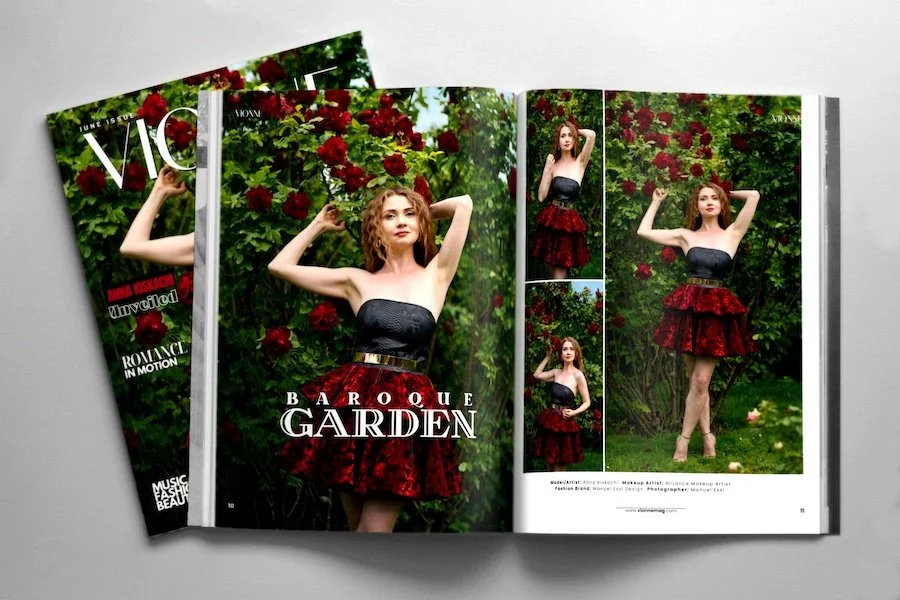
Want more?
Order Isssue #14 to discover more powerful stories and explore exclusive features, interviews, and fashion highlights.
Available now online & in print-on-demand.